The ones who run hot and cold feel like chemistry. The kind, steady ones feel boring. This plain-language book uses real research to explain why. Then it shows you how to spot unavailable partners early, ride out the pull toward people who keep you guessing, and give someone who shows up a real chance.
They come back warm, as if nothing happened. You’re so relieved that you never ask why. And then it happens again.
In the book: why a reward that arrives at random hooks the brain harder than one you can count on.

They paint a beautiful future, then go vague the moment you try to put a date on anything. You keep waiting for the person they describe.
In the book: how to tell future-faking from real intent, and why what they do counts more than what they promise.
A late-night “hey you,” a like on your photo, then silence. Never enough to feel secure. Never so little that you walk away.
In the book: the early signs someone is only breadcrumbing you, and what people who are really interested do instead.

They told you, more or less, at the start. You hoped it would change once they got to know you.
In the book: why you try to fix them, why you fall for who they could become, and why the time you’ve already put in keeps you stuck.
They text when they say they will and remember the little things. Somewhere around the second dinner you think, “They’re great. I just don’t feel it.”
In the book: why calm can feel flat to a nervous system used to uncertainty, and what you can do about it.

Different name, different job, maybe a different city. The same slow dread when the texts get shorter, and the same late-night rereading of old messages.
In the book: a five-question exercise that puts your past relationships side by side, so you can see what repeats.

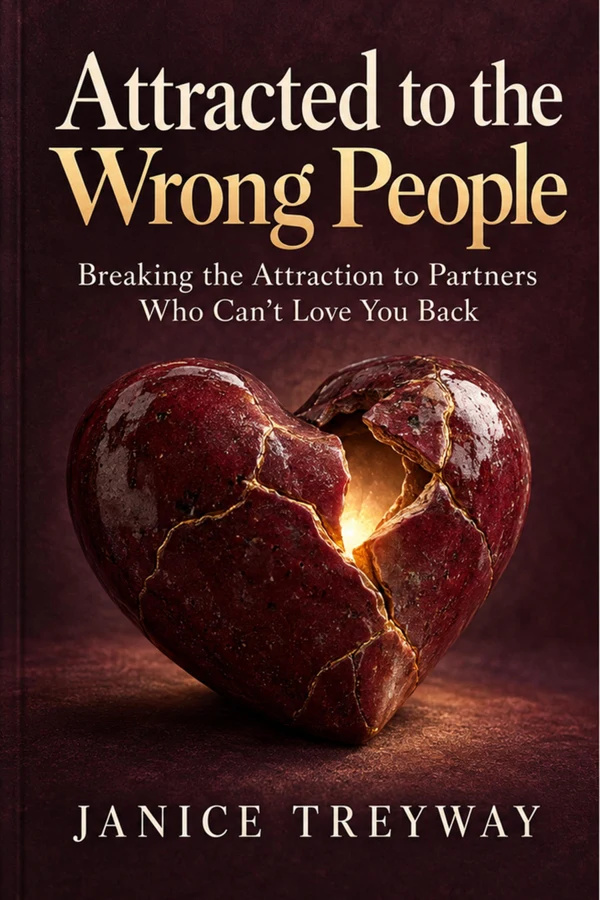
Most of us think attraction just happens. You like who you like. Some of it is built in. But research suggests much of it is learned, and what you learned can keep steering you wrong.
If love once came wrapped in uncertainty, uncertainty starts to feel like love. So the person who keeps you guessing feels electric. The person who shows up on time, every time, feels like nothing at all.
Your chemistry was shaped by what love felt like in the past. That also means you can work on it.
Attracted to the Wrong People doesn’t ask you to ignore your feelings or force yourself to like someone you don’t. It shows you where the pull comes from, so you can choose where you go next.
It explains the research in plain language, without blame. Then it gives you practical tools to spot unavailable partners early, interrupt the pull in the moment, and give steady people a fair chance.
Three parts, each building on the last.
Line up your past relationships and see what repeats.
Judge a new partner by what they do over three months, not by how you feel.
See it. Trace it. Retrain it.
Line up your last few relationships and spot what repeats. Take a first look at your attachment style. Learn the anxious-avoidant trap, where one partner chases and the other pulls away, and why mixed signals hook the brain so hard.
You’ll also learn the relief test: is it chemistry, or is it relief that they finally replied?
Learn why familiar pain can feel like home. Spot the old stories you tell about love, like the urge to rescue someone, or falling for who they could become.
And the big one: why kind can feel boring, and what your nervous system is doing when it does.
Spot unavailability early by watching what a new partner does over the first 90 days, ride out the pull with urge surfing and if-then plans, and date by your values instead of by how intense the connection feels.
You’ll also meet an idea researchers call earned secure attachment: some adults who had a hard start in life still become secure in their relationships. As the book puts it, your starting point is not your destination.
This is not a diagnosis. Use it to start noticing your own pattern.
If several of these sound like you, it’s worth a closer look. The book shows you how to spot the pattern early and what to do instead.
What “emotionally unavailable” means, why it’s a pattern and not bad luck, and the five questions that reveal yours.
The two dials behind attachment (how much you fear being left, and how uneasy closeness makes you), in plain language, and what they say about who you reach for.
Why one person chasing and the other pulling away makes both of them feel worse, and why these pairs find each other.
Unpredictable rewards, the brain chemical dopamine, why you can want someone who doesn’t make you happy, and the relief test that tells butterflies from anxiety.
The deep beliefs (schemas) behind fear of abandonment and the sense that no one will ever meet your need for warmth, and why a healthy partner can feel like “no spark.”
Core beliefs, the urge to rescue, falling for who someone could become, and a simple story check to loosen an old belief.
What your nervous system is doing on the second date with someone good for you, and what you can do about it.
Consistency, reciprocity, breadcrumbing, future-faking, green flags, and how to judge someone over the first 90 days.
Urge surfing, if-then plans, dating by your values, no contact, and what to do when an ex comes back.
Earned secure attachment, what a secure base is, how to give steady love a fair chance, and self-compassion.

Breaking the Attraction to Partners Who Can’t Love You Back. An instant-download ebook by Janice Treyway, Book 2 in the Rewired for Love series. Inside:
Do the five-question exercise in Chapter 1 tonight. Put your answers side by side and see how much they repeat.
If the book isn’t right for you, email support@drawntobetter.com within 14 days for a full refund.
Janice Treyway writes for people who keep ending up with partners who can’t fully show up. She explains every new term in everyday words. Every chapter ends with a summary. When an idea comes from a study, she names the researchers and the year.
It’s Book 2 in the Rewired for Love series, after Why Do I Push Away the People I Love? You don’t need to read Book 1 first. You can start right here.
It won’t diagnose you or anyone you’ve dated, and it won’t blame you. Patterns form for good reasons, usually long before we have any say in them.
Another electric start and another slow fade. Then another late night spent rereading old messages and wondering what you did wrong.
Know your pattern, spot the early signals, and give someone who shows up a real chance. It may feel quieter than fireworks at first. Research suggests many good relationships start that way.
Anyone who keeps falling for people who can’t fully show up: distant, hot and cold, hung up on an ex, “not ready for anything serious,” or already with someone else. It’s also for people who feel nothing when someone kind and steady comes along.
No. You don’t need to be dating anyone, and you don’t need a label for what’s going on. You only need to be curious about why you’re drawn to the people you’re drawn to.
No. It treats your pattern as something you learned, not a flaw. It also doesn’t paint everyone who disappointed you as a bad person. Many unavailable partners are decent people who can’t give you what you need.
They’re a pair in the Rewired for Love series. That book is about pushing good people away. This one is about being pulled toward people who can’t love you back. You may see yourself in both, but each book stands on its own.
No, and it says so. It’s an educational book. If looking back at past relationships stirs up more than you can handle alone, the book urges you to talk to a therapist, counselor or doctor.
This book is about partners who are distant or inconsistent, not partners who threaten, control or hurt you. If you feel afraid, please contact the National Domestic Violence Hotline at 1‑800‑799‑7233 (or text START to 88788). In a crisis, call or text 988. If you are in immediate danger, call 911.
Right after checkout, you’ll get an email with your member-area login. Your ebook is waiting there, along with anything else you added. It’s a PDF you can read on your phone, tablet or computer.
Yes. The ebook comes with a 14‑day money-back guarantee.
Yes. Right after checkout, you’ll have the chance to add Drawn to Better: The Course, the companion video course. Its 23 narrated video lessons go deeper than the book, with a worksheet for each lesson and 22 quizzes. You can also find it any time at drawntobetter.com/course.
P.S. Skipped to the end? Here’s the short version. The next exciting, hard-to-read person will feel like chemistry too. This book shows you why, how to spot them early, and how to choose someone steady instead. It’s $47, with a 14‑day money-back guarantee. Start with the five-question exercise in Chapter 1 tonight.
Enter your name and email. Next, you’ll finish your order on our secure checkout page.
🔒 Your details are safe. Unsubscribe anytime.
Free, and it takes about ten minutes. Take a quick look at your attachment style, try a short test that tells chemistry from relief, and learn nine early warning signs. Plus a pocket card for judging a new partner over the first 90 days.
Free. Unsubscribe anytime.